
Investing in agricultural real estate is becoming a topic of great interest to many investors. Especially in a risky market, investors tend to seek long-term assets, and agricultural real estate is seen as a potential option due to its large land reserves and strong growth potential.
For many years, agricultural real estate was often considered a less-noticed segment due to its low liquidity and heavy reliance on production activities. However, as the demand for clean, sustainable agricultural products and ownership of assets linked to actual exploitation increases, the market is beginning to witness a strong shift of capital into this sector. No longer simply owning land to wait for price increases, agricultural real estate is now seen as an asset model that can be operated, exploited, and generate long-term economic value.
Agricultural real estate is becoming a new investment trend.
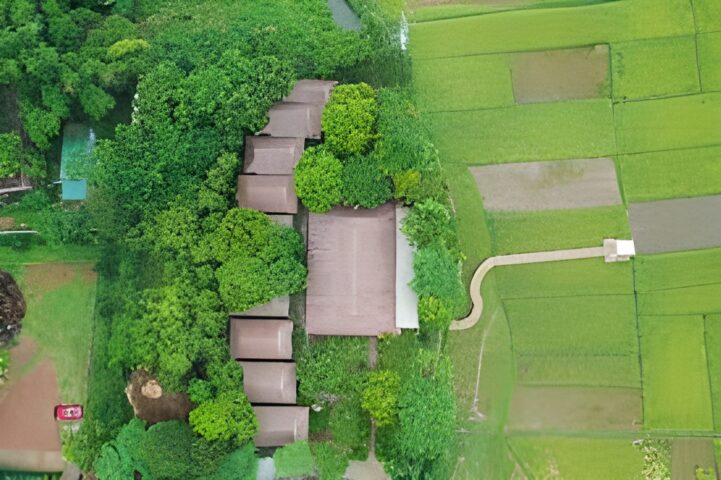
Agricultural real estate is becoming a promising investment channel. (Image: Collected)
In the context of an economy facing inflationary pressures and financial volatility, many investors are beginning to prioritize assets with stability and the ability to retain value in the long term. This is also why agricultural real estate has gradually received more attention in recent years.
Agricultural land in Vietnam still has significant potential for development, especially as legal policies are gradually being improved to promote efficient land resource exploitation and attract businesses to invest in agriculture.
The shift in investment mindset has also led to a market movement from a “buy land and wait for the wave” model to an investment model linked to exploiting the real value of agricultural land. Areas with advantages in climate, soil, and potential for developing raw material sources are becoming focal points attracting long-term investment.
The value of agricultural land lies not only in location.
Unlike many traditional real estate types, the value of agricultural real estate comes not only from infrastructure or urbanization rates but also from the ability to operate and exploit land resources.
An agricultural plot can generate value through agricultural production, the development of high-tech agricultural models, the establishment of raw material areas, or the combination of ecotourism and agricultural experiences. This gives agricultural real estate an additional element of cash flow generation instead of relying solely on market price increases.
In the context of the growing trend of green consumption and high-quality agricultural products, land with sustainable development potential will become increasingly valuable in the long term.
Investors are beginning to prioritize assets with practical operational value.

The trend of seeking assets with operational potential and real value generation is increasing. (Image: Collected)
The current market shows that many investors are becoming more cautious about highly speculative segments. Instead, the trend of seeking assets with operational potential and real value generation is strongly increasing.
Agricultural real estate thus becomes a suitable option for investors who want to own assets linked to essential market needs such as food, agricultural products, and agricultural supply chains.
However, many experts also warn that if money flows into agricultural land for short-term speculation, it could create the risk of abnormal price increases and market imbalances.
This shows that investors need to choose a sustainable development model instead of focusing solely on short-term price appreciation expectations.
Long-term potential of agricultural real estate in Vietnam
Vietnam possesses significant advantages in agriculture, with diverse climates, vast land resources, and stable demand for agricultural products. This is considered a crucial foundation for the future growth of agricultural real estate.
In particular, as the agricultural sector transitions towards high technology, ESG, and NetZero, the value of agricultural land is no longer limited to traditional production but is expanding into modern agricultural economic models.
Vietnam’s agricultural real estate sector has strong growth potential in the future. (Image: Collected)
Infrastructure and Legal Frameworks Are Opening Up New Opportunities for the Market
One of the factors driving the agricultural real estate market is the improvement of transportation infrastructure and legal mechanisms related to land.
According to many assessments, new policies are creating an important foundation for businesses and investors to feel more secure when participating in this sector. However, the investment process still needs careful consideration regarding legal aspects, planning, and the practical exploitation potential of the land.
In the long term, areas with well-planned agricultural development, convenient infrastructure connections, and the potential to form concentrated production zones will have greater growth potential.
The trend of investment linked to operation will lead the market
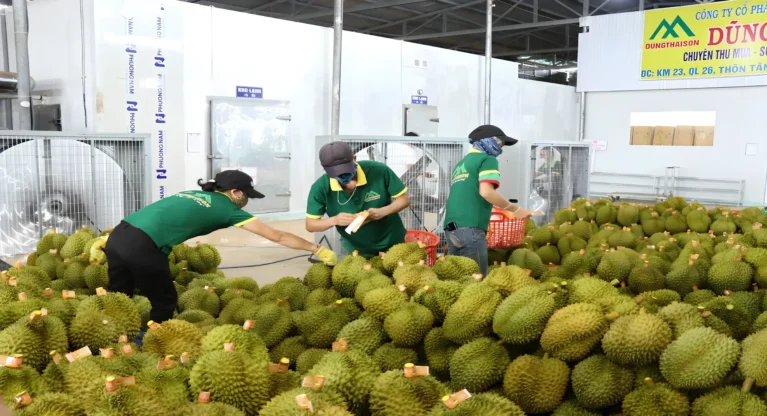
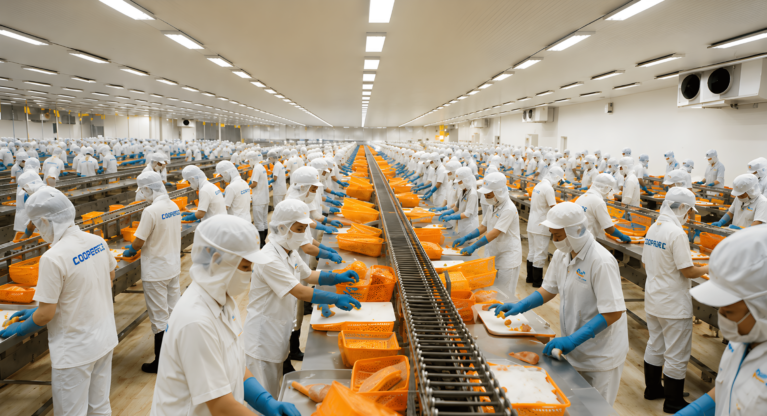
Unlike the previous period, the market is now witnessing the emergence of agricultural real estate investment models linked to practical operation, such as high-tech farms, export raw material zones, or integrated agricultural ecosystems.
This allows investors not only to own assets but also to participate in the agricultural value chain, from production and processing to product commercialization. Agricultural real estate is gradually becoming an investment channel suitable for sustainable development trends and the need for long-term asset accumulation in the new era.




 Hotline
 Zalo
Zalo
 Messenger
 Fanpage